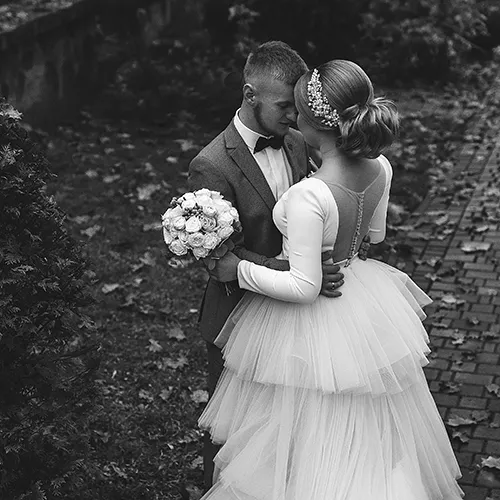
Civil Wedding Ceremony – Procedure, To-Do List, and Costs

If you want to be legally married in Austria, a civil wedding is a must. That’s why we’re here to tell you how a civil wedding works, how much it costs, what minor pitfalls to watch out for, and what you need to do as part of your wedding preparations. Of course, we’ll also give you tips on how to make your civil wedding creative and unforgettably beautiful.
Jump straight to the information that interests you:
At which registry office can we get married?
Do we need witnesses?
What is the “eligibility to marry” check?
How and when do you schedule a wedding date at the registry office?
How much does a civil wedding cost?
What happens during a civil wedding?
How can you make your civil wedding special?
Tasks for Your Civil Wedding
The supporting program for your civil wedding ceremony
This article covers the following topics:


1. Location of the civil wedding ceremony
Before you get started, you’ll first need to decide where you’d like to get married. Here’s something many people don’t know: A civil wedding can take place at any civil registry office. So you don’t necessarily have to get married in your hometown or local municipality. From A for Abfaltersbach to Z for Zwölfaxing, every civil registry office is available to you—the choice is yours!
Also: There are civil weddings that take place outside the town hall or community hall, which are usually designated for this purpose. However, the location must be fitting for the significance of marriage and appropriate. Whether this is the case is decided by the registry office you’ve chosen. Therefore: Think of a suitable setting and describe your plan to your registrar. You’ll be surprised at what’s possible, despite some bureaucratic constraints.
Tip: Some of our wedding venues are also approved for civil ceremonies. Just take a look around.
2. Civil wedding ceremony with witnesses
The second decision you should make well before the wedding is: “Do we want to have witnesses at our wedding?”
These days, it’s possible to have a civil wedding without any witnesses at all. This can be quite practical, especially for elopements, but aside from that, we’d advise you to have witnesses at your wedding. For one thing, it’s a lovely tradition and an even lovelier sign of friendship and trust. For another, witnesses can be a big help with wedding preparations.
You can read what we mean here: What Do Wedding Attendants Do? – Feel free to share the link with your wedding attendants, too.


3. Verification of Your Eligibility for Marriage
Before you can get married in a civil ceremony, your eligibility to marry must be confirmed. To do this, you need to register at a civil registry office (it doesn’t have to be the one where you plan to get married), and they will then verify whether you meet the required conditions for marriage. It sounds worse than it is. Basically, you can’t already be married, related by blood, or in a mutual adoptive relationship.
You will need the following documents to determine your eligibility to marry:
- official photo ID
- Birth Certificate
- Proof of citizenship or an entry in the Central Citizenship Registry
- Proof of primary residence—only if it is located abroad
- if applicable, documentary proof of academic degrees
If you have been married before, have children, or have limited legal capacity, additional documents are required. You can find a complete list here: Required Documents for the Record of the Determination of Eligibility to Marry.
Please note: A determination of eligibility to marry is valid for a maximum of six months. This is a consequence of Point 4.
4. Set a date for the civil wedding ceremony
You can register for a civil wedding no earlier than six months before your desired wedding date. Since by that point—for both you and all other couples—the date with the wedding venue and, if applicable, the date for the church wedding have long since been set, the demand is so high that it raises the question of whether civil registry offices should actually be subject to gambling laws.
Of course, your chances are better if you live in the countryside, but please don’t worry if you still can’t get your preferred date. It’s quite common to hold the civil wedding ceremony a few days to weeks before the actual wedding celebration. What’s more, a civil wedding with just your closest family and friends can be incredibly beautiful—more on this in Point 7: Getting Creative with Your Civil Wedding Ceremony.


5. How much does a civil wedding cost?
The cost of a civil wedding ranges from 55.45 euros to approximately 200 euros. This depends partly on your nationality and partly on your individual preferences. Here’s a brief overview:
- Determination of Eligibility for Marriage: 50 euros
- Submission of foreign documents: 130 euros
- Wedding ceremony during office hours in the office: 5.45 euros
- Wedding ceremony outside of office hours in the office: 10.90 euros
- In all other cases: 54.50 euros
There is one more exception: If you are unable to visit the registry office due to physical limitations or an illness, a wedding ceremony held off-site will also cost just 5.45 euros.
6. The Civil Wedding Ceremony Procedure
The procedure for a civil wedding is quite straightforward and takes between 30 and 45 minutes.
- You'll meet at the registry office. Music is usually played as you walk into the wedding hall.
- During the official ceremony, the registrar will ask if you wish to marry each other. As soon as you say “yes,” you are legally married.
- Next comes the wedding vows; you exchange rings, and of course, the kiss is a must!
- Next, the marriage certificate will be read aloud, and you and your witnesses will be asked to sign it.
- The wedding ceremony officially comes to an end, and you leave the ceremony hall as a married couple.


7. Planning a Creative Civil Wedding Ceremony
Even if the civil wedding ceremony is just the first step for you, it’s still the first time you’ll officially say “I do” to each other. So, give this part a little more attention than usual, and it will become a unique moment that you’ll remember just as fondly as the grand church or non-religious wedding ceremony:
- Schedule a meeting with the registrar in advance. That way, the wedding speech will be more personal.
- A personalized welcome song or a singer and guitarist at the reception will add a special touch to the ceremony!
- A ring pillow, a wedding candle, and some floral decorations on the registrar's desk—and it already looks festive.
- There is also room for a wedding arch and a wedding backdrop in front of the registry office.
Tip: Set aside some time for surprises: Clubs, friends, and coworkers may have prepared something for the reception. So be sure to schedule some extra time during the reception.
8. Your To-Do List for the Civil Wedding Ceremony
- Choose the registry office or the location for your wedding ceremony
- Ask your witnesses
- Schedule an appointment (six months in advance)
- Make sure to obtain confirmation of your eligibility to marry
- Discuss the procedure with the registrar
- Plans and organizes the supporting program
Tip: You might want to draw up a prenuptial agreement before your wedding. We promise you, it’s much more romantic than it sounds—as you can read here: Prenuptial Agreement—A Declaration of Love with Legal Clauses.


9. Planning Your Civil Wedding
Whether you decide to head to the civil registry office on short notice, just the two of you, or whether you’ll have save-the-date cards, food trucks, and a huge party is entirely up to you. Don’t let anyone tell you what a civil wedding ceremony has to look like. Of course, there are a few things you should keep in mind—like documents, choosing a surname, or booking your appointment well in advance. But in every other respect, you’re free to decide exactly how you want it to be!
If you're looking for some inspiration for planning your civil wedding ceremony, be sure to read this article: How to Make Your Civil Wedding Extra Special!


Created on
15.3.2023
Updated on
2.5.2026