Wedding Traditions – 12 Facts

As you’ve been planning your wedding, you’ve probably already asked yourselves why the bridal bouquet is tossed at a wedding. And surely you’ve also wondered whether the wedding ring is worn on the fourth finger because that finger is called the “ring finger,” or whether it’s called the “ring finger” because the wedding ring is worn on it. Of course, you were also dying to know what bridesmaids and dreamcatchers have in common. No?! Well, okay, neither were we. But when you deal with weddings every day like we do, this knowledge inevitably piles up—and what could be better than sharing it with you?
This article covers the following topics:
Why the Ring Finger Is Called the Ring Finger
It’s the chicken-and-egg question of the wedding industry, and just like that one, there’s a clear answer to the question about the ring finger. Engagement and wedding rings are worn on the fourth finger of the left hand because people used to believe that a vein in that finger led directly to the heart. Over the centuries, the specific hand became irrelevant, and the finger was named after the wedding ring. BTW: The egg came first.
More on this topic: Left or right—which hand should the engagement ring go on?
Why does the bride wear white?
Today, one might say that Maria de’ Medici was ahead of her time in 1600. Her wedding was the first in which an eggshell-colored silk dress was mentioned. A little more than a decade later, Princess Elizabeth of England also chose a white brocade dress. But it was Queen Victoria, who said “I do” to Prince Albert of Saxe-Gotha in 1840 while wearing white silk, lace, and a short bridal veil, who really set the trend in motion. From then on, a white wedding dress was worn at every aristocratic wedding. The wealthy classes also followed this example, and today the trend is so old that it has become a tradition.
More on this topic: How to Find the Perfect Wedding Dress


Bridesmaids confuse evil spirits
There are several reasons why bridesmaids’ dresses should match the wedding dress: It looks pretty, shows their bond with the bride, and sets the bridesmaids apart from the rest of the guests. But the custom itself dates back to Roman times. Back then, people believed that evil spirits would attend the wedding and try to curse the bride. The bridesmaids dressed like the bride to confuse the spirits and thus ensure a happy marriage.
More on this topic: Inspiration for beautiful bridesmaid dresses
What is the purpose of a bridal veil?
The bridal veil serves a similar purpose to the bridesmaids' dresses. It is based on the Greek tradition of hiding the bride from evil spirits.
Something old, something blue, something borrowed
The tradition of a bride wearing “something old, something new, something borrowed, and something blue” dates back to an old English rhyme. Something old represents continuity, something new represents optimism for the future, something borrowed symbolizes borrowed luck, and something blue represents purity, love, and fidelity. The custom made its way to Austria, Germany, and Switzerland much like Halloween did—through TV shows and movies.


The wedding cake is for the kids!
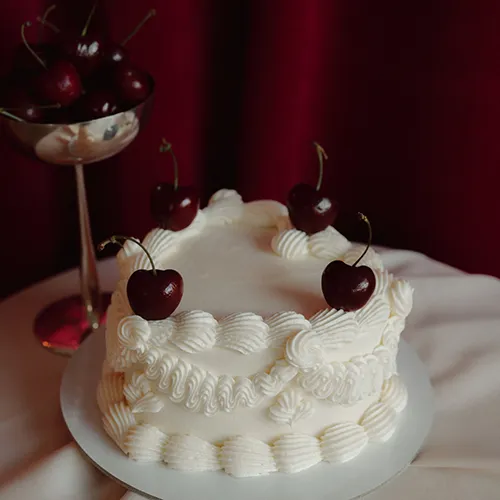
The wedding cake takes us back to ancient Rome. There, guests would break a loaf of bread over the bride’s head to promote her fertility. Over the centuries, the bread has turned into a cake; it’s no longer broken but sliced, and the only person who looks like she might be pregnant afterward is little Max, who secretly polished off three slices.
More on this topic: 5 Steps to Choosing the Right Wedding Cake
Why do people say “tying the knot” in English?
In many cultures around the world—including those of the Celts, the Hindus, the Egyptians, and the northern peoples of Westeros—the bride and groom’s hands are literally tied together to symbolize the couple’s commitment to one another and their new bond.

Why does the groom carry the bride over the threshold?
Let the Ghostbusters know—the ghosts aren't giving up. After the bridesmaids and the veil thwarted all their evil plans, the ghosts have decided to hide under the doorframe and lie in wait for the bride there. But thanks to her strong, newlywed partner, she's safe from this treachery, too.
Why do newlyweds go on their honeymoon?
The tradition of going on a honeymoon originated in Northern Europe. There, it was customary for the newlyweds to retreat for a moon—about 30 days—after the wedding. Probably so they could binge-watch their favorite TV shows or something like that. In any case, a family member would bring them a cup of mead every day—hence the English term “honeymoon.”
Why does the bride toss the bouquet?
These days, the significance of tossing the bridal bouquet is well known. The unmarried woman who catches the bouquet has been chosen by fate and will be the next to marry. Whether many wedding parties give fate a helping hand—and whether the bouquet toss is often more fiercely contested than horse races in mafia movies—is a matter for another discussion. The custom has its origins in 15th-century England. Back then, it was said that receiving something from the bride at a wedding would bring good luck. As a result, guests would often tug at the bride’s dress in an attempt to snatch a piece of it. The bouquet toss served as a distraction back then. As she left the church, the bride would toss the bouquet behind her to give the guests an alternative target. This makes the bridal bouquet probably the first decoy in human history.


Why is a garter thrown?
The garter toss also originated in England and is simply a variation on the bouquet toss. The men wanted to be able to catch something, too. The garter caught on because it has to be something that belongs to the bride—for good luck.
Where does agape come from?
Most common in Austria, southern Germany, and Switzerland, the agape has its origins in the Christian faith and was held not only at weddings but also at other important events such as baptisms, First Communions, and Confirmations. Back then, however, it was a bit different. In the past, the entire congregation would attend the agape, and all guests would bring food to share with one another. As lovely as that may sound, in Vienna that would mean around two million guests at your agape.
More on this topic: What is an agape reception at a wedding?


Created on
23.11.2022
Updated on
10.11.2025