5 Steps to Choosing the Right Wedding Cake

Of course, no wedding is complete without a wedding cake—cutting into this delicious work of art is a real highlight for everyone in attendance on the wedding day. Whether large or small, chocolatey or fruity, classic or unique—the wedding cake should not only look beautiful but also be a first-class taste sensation for every guest. However, the countless possibilities make choosing a wedding cake a real challenge. With the following five steps, we’d like to provide you with some helpful information and tips for selecting the perfect wedding cake for you.
This article covers the following topics:
1. Size of the Wedding Cake
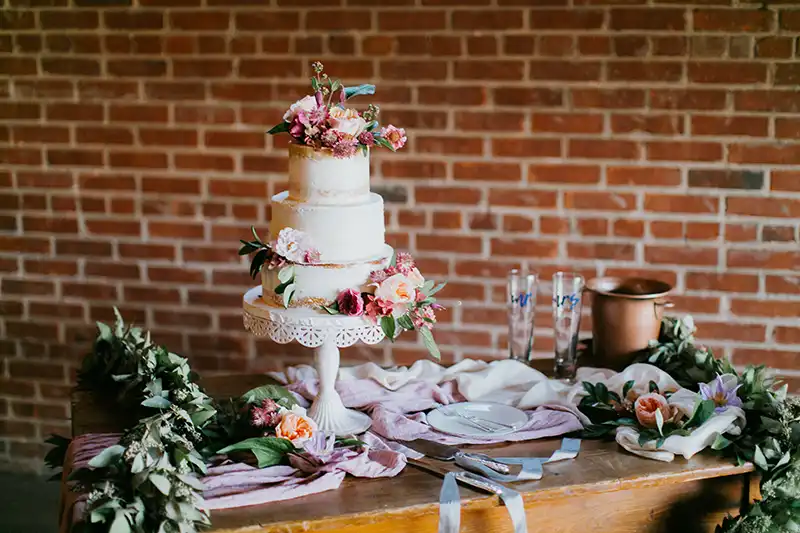
The size of the wedding cake naturally depends on the number of guests and whether the cake is served on its own or accompanied by cupcakes, cake pops, and the like—that is, as part of a dessert table. A single-tier cake is, of course, much easier to make and transport than a multi-tiered cake. Multi-tiered wedding cakes come in a wide variety of styles—self-supporting, stacked on top of each other, or displayed on a cake stand. While stacked cakes must be eaten from top to bottom, guests can choose their favorite flavor when the wedding cake is displayed on a cake stand. Additionally, this setup offers more space for decoration, and the tiers can be delivered separately and assembled on-site.
2. Flavor of the Wedding Cake
Ideally, you should choose at least two different flavors for your wedding cake, one of which should be your favorite. Choose a variety of flavors that aren't too unusual, so there's something for each of your guests. Also, keep the season in mind.
Spring: In the spring, light and fruity flavors are always a good choice. A variety of berries paired with lemon cream or elderflower cream create a refreshing taste.
Summer: During this season, chocolatey flavors aren't as popular as fresh, fruity ones. For a summery treat, try tropical flavors like coconut and mango. Sweet, creamy coconut pairs perfectly with juicy mango. Strawberries and basil also make for a surprisingly refreshing flavor combination.
Fall: Figs and dark berries are a perfect match for a fall wedding cake. Warm, spicy flavors like cinnamon, nutmeg, and cloves create a cozy atmosphere.
Winter: In winter, the flavors should be rich and robust, such as chocolate and hazelnut. The intense chocolate and nutty hazelnut offer a decadent treat.
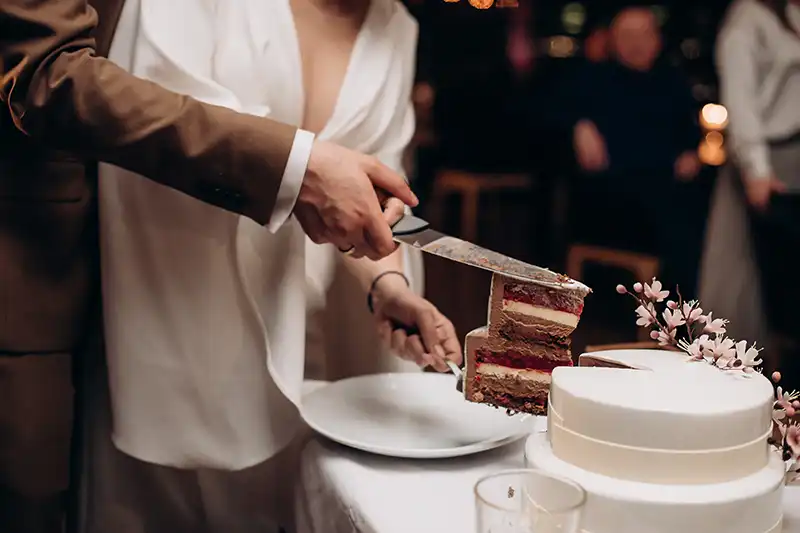
If you’re expecting many guests with allergies or vegans, be sure to take their preferences into account. Of course, you’ll also need to include a non-alcoholic option for your younger guests. But the most important tip is this: Try the flavors in advance! Professional pastry chefs will be happy to invite you to a tasting. Sample them all and make your decision based on your gut feeling and your personal preferences.
3. Appearance and Design of the Wedding Cake
It’s a feast for the eyes, too! Whether classic, modern, or unique—ideally, the design of your wedding cake will, of course, complement your color scheme or wedding theme. There are also several options when it comes to the shape of your wedding cake:
Tiered Cakes: A striking difference among wedding cakes is the number of tiers. The classic wedding cake, as seen at traditional weddings, usually has one, three, or five tiers.
Square Shapes: Especially with multi-tiered cakes, a square shape can look very chic and offer many design possibilities. Whether flat or cube-shaped—they can be artfully arranged in a staggered pattern to add visual interest to the overall look.
Freestanding tiered stand: Each tier can be cut individually. This option provides more surface area for embellishments and decorations, making it ideal for elaborate designs. Additionally, the individual tiers can be transported separately and assembled on-site, which makes transportation much easier.
Heart-Shaped: Heart-shaped wedding cakes, decorated with white frosting and personalized lettering—such as the couple’s names or a romantic quote—are particularly popular right now.
If you have absolutely no idea what your wedding cake should look like, take a look on Instagram or Pinterest—you’re guaranteed to find inspiration there. It’s best to bring pictures of your dream cakes to your first consultation with the pastry chef. The frosting is absolutely crucial to the look of the wedding cake. Here are some of the most popular options:
Naked Cake
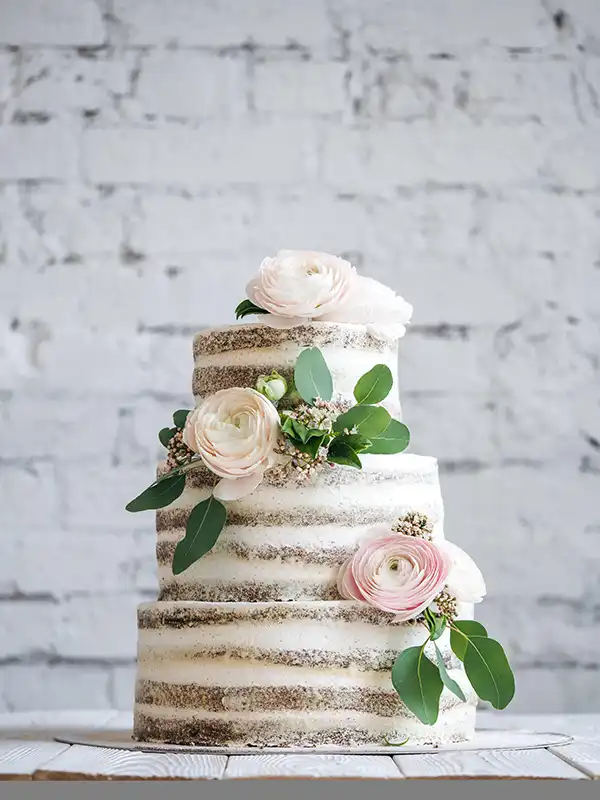
As the name suggests, when you order a naked cake, you get the “naked” cake—that is, completely without any outer frosting. You can clearly see the layers of cake and fillings. Naked cakes are usually decorated with real flowers or berries. This type of cake is especially popular for natural wedding themes, such as boho. Downside: Because the protective frosting is missing, naked cakes dry out quite quickly. We would therefore recommend a semi-naked cake, which we’ll discuss in the following paragraph.
Semi-naked cake
Here, the naked cake is coated with a very thin layer of frosting, so that the layers of cake and fillings are only slightly visible.
Fondant Cake
Fondant may not be quite as trendy as other wedding cakes right now, but it’s much more stable than whipped cream or other fillings. Fondant has no flavor of its own and is very sweet, but it’s applied in a wafer-thin layer over the cake.
Cream Cake
As the name suggests, the cake is completely covered in a cream, usually cream-based. It’s very important that the cake is well-chilled so the coating doesn’t melt.
Alternatives to the Wedding Cake
Modern alternatives to the traditional wedding cake—such as cupcakes, cake pops, macarons, donuts, or popsicles—are becoming increasingly popular. They can be beautifully presented on a tiered stand or a dessert table and look less bulky. Guests can easily eat them while standing. They also offer the opportunity to serve many different flavors, which is rather difficult with a classic wedding cake.
-

4. Decorating the Wedding Cake
When it comes to decorations, the possibilities are virtually endless. Whether you prefer classic cake figures or modern cake toppers, real flowers or flowers made of marzipan or fondant, satin ribbon, a pennant garland, or fruit—you’ll find the perfect decorations here for any wedding theme.
Cake toppers: These small figurines offer a wide range of options—whether it’s a bride and groom, hearts, or doves. They can be made of materials such as porcelain, sugar paste, or marzipan.
Cake toppers: They're very trendy right now . These decorations can include custom lettering, pennant garlands, or other designs that are simply placed on top of the cake to add a personal touch.
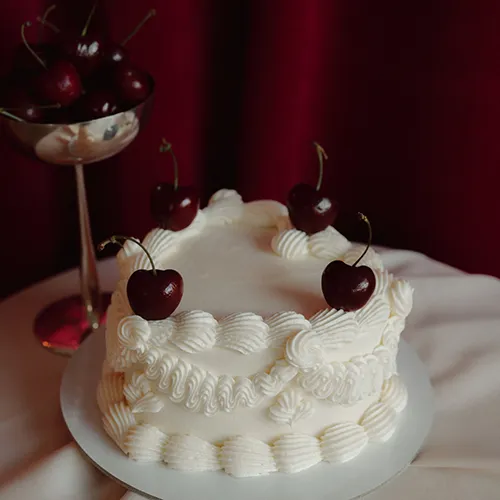
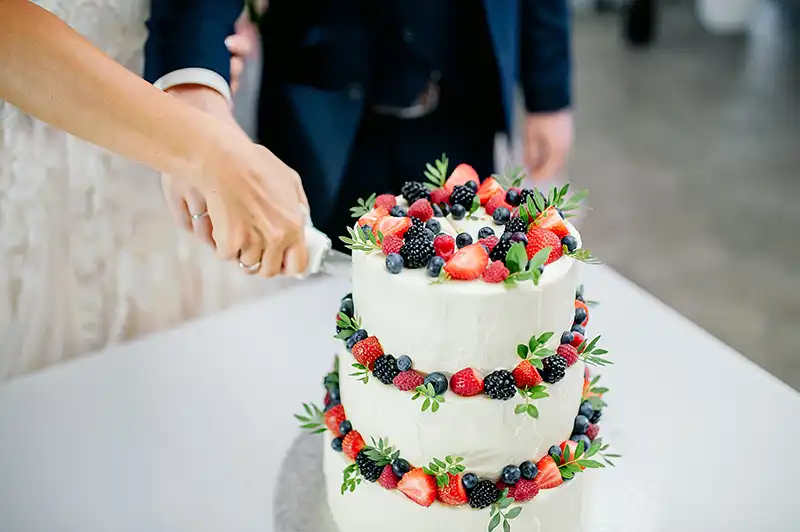
Flowers & Fruit: Seasonal fruits and flowers are ideal for a wedding cake that reflects the time of year. Not only do they lend the cake a natural beauty, but they also perfectly complement the season in which your wedding takes place.
5. The Perfect Time for the Wedding Cake
You should give some serious thought to where and how you want to present your wedding cake at your wedding reception. Until a few years ago, it was very often served as a midnight treat. But since there’s usually too much cake left over after dinner—because everyone’s stomachs are simply too full by that point—people nowadays tend to serve it with afternoon coffee. The wedding cake also looks much better in photos taken in daylight, and it provides a lighthearted break in the usually somewhat longer gap between the pre-dinner reception and dinner.
Your pastry chef will be happy to help you with all these decisions and explain which size makes sense for your wedding, what flavors are available, and what designs and decorations are possible. Together with you, the pastry experts will then develop a concept for the wedding cake of your dreams.
The Cost of the Wedding Cake & Planning
Now you can start to define a little more precisely when and where you’d like to present each type of wedding cake. But what about the planning and costs for these sweet treats on the big day? First and foremost: be sure to start planning early enough so that the cake designers can create your sweet masterpiece exactly the way you want it—with your favorite flavors and the perfect look. We recommend ordering your wedding cake at least three months before the big day, but the sooner, the better. The price range varies depending on the type, size, and quality of the ingredients—a wedding cake typically costs between 300 and 700 euros.
You’ll find more ideas and information on wedding cakes in our wedding cake trends section!

FAQ: Wedding Cakes
What should you look for when choosing a wedding cake?
You should pay special attention to the quality of the ingredients—and, of course, the pastry chef’s craftsmanship should appeal to you. The cake should blend harmoniously with the overall wedding theme. But with all these external factors in mind, don’t forget about the taste. Always ask yourselves what you enjoy eating and what your guests will appreciate in terms of flavor.
Who gets the first slice of the wedding cake?
According to tradition, the bride and groom share the first slice of the cake, an act that symbolizes their bond and their desire to face all of life’s challenges together. In some places, there is a lighthearted custom that whoever holds their hand higher while cutting the cake will have the final say in the marriage.
What kinds of wedding cakes are there?
Wedding cakes are typically characterized by their multiple tiers and decorations. Fondant, marzipan, or buttercream are often used. Decorative elements such as flowers, pearls, and bows are also popular.
What is the symbolic significance of the wedding cake?
The wedding cake has a long tradition and symbolizes fertility, happiness, and prosperity. When the bride and groom cut the cake together, it embodies their future unity and mutual support.
How much does a wedding cake cost?
Depending on the size, design, and complexity, it usually costs between 300 and 700 euros. Naked cakes or multi-tiered cakes with elaborate decorations tend to be more expensive.
Who's paying for the wedding cake?
While it was traditionally customary for the bride's parents to pay for the wedding cake, nowadays the bride and groom increasingly cover the costs themselves or in consultation with their parents.
When should you order the wedding cake?
To be on the safe side, it’s a good idea to order your wedding cake at least three months before the big day. If you’re ordering from a particularly popular bakery or during peak wedding season, it may be wise to order even earlier. If possible, take advantage of the opportunity to schedule a tasting.
How much does a wedding cake for 50 guests cost?
For a wedding party of 50 people, the cost of the cake varies depending on the design and ingredients, though for 50 guests, you can expect an average price between 250 and 500 euros.
How do you store a wedding cake, and how long does it stay fresh?
If stored properly, a wedding cake will stay fresh for about two to three days. It’s best to keep it cool, but not in the refrigerator, so as not to compromise its flavor and texture. A better option: Cover it with plastic wrap or place a cake dome over it, then store it on the balcony or in a sheltered, cool room.
How many servings does a wedding cake yield?
The number of servings in a wedding cake depends on the cake's size and how it is portioned. Typically, a three-tier cake yields about 50 to 60 slices.
How many flavors should a wedding cake have?
When choosing the filling for a wedding cake, the couple’s tastes and preferences are always the top priority. Popular fillings include classic flavors such as vanilla cream, chocolate ganache, fruity strawberry or raspberry mousse, as well as more exotic options like mango-passion fruit cream or a delicate pistachio filling. Combinations of different creams and fruit layers are also possible to create a unique taste experience.
Make Your Own Wedding Cake—Why Would You Want to Miss Out on That?
Baking a wedding cake yourself can be stressful and requires special skills in pastry and baking. In addition, people often don’t have the proper storage and transportation facilities at home. Even if you—or your girlfriend or best man—bake a lot at home, baking a wedding cake is a whole different ballgame. It often has to serve more than 60 people and should be absolutely delicious.
Created on
23.10.2020
Updated on
23.10.2025